Home Remodeling & Exterior Work in Buffalo, NY
Local General Contractor Expertise
In neighborhoods like Elmwood-Bryant, Parkside, and the North Buffalo historic districts, we serve homeowners planning home addition construction and general contractor work with respect for the city's architectural heritage. From detailed permitting to preservation-sensitive execution, our focus helps Buffalo residents expand their homes while honoring the character that defines each neighborhood.
How We Work
A clear path from planning through final inspection
Site Assessment & Permits
We evaluate your property, check preservation board rules if you're in a historic district, and handle all Buffalo building code applications. This step clarifies what's possible and protects your investment.
Design & Framing
We prepare construction documents and frame your addition to meet code. Special attention goes to foundation work, load-bearing support, and any structural elements that affect the original structure.
Rough-In Inspections
Electrical, plumbing, and structural work are exposed and inspected before any drywall. Buffalo code enforcement verifies everything is correct before we close walls.
Finish Work & Final Inspection
Drywall, paint, flooring, and trim are installed and finished. A final city inspection confirms the addition is complete, safe, and ready to occupy.
You'll always know what's happening next—and when.
Our Services
Second-Story Additions
Many Parkside and North Buffalo homes can support vertical expansion. We assess foundation strength, match roof lines, and integrate mechanical systems. Great for families needing extra bedrooms without losing yard space.
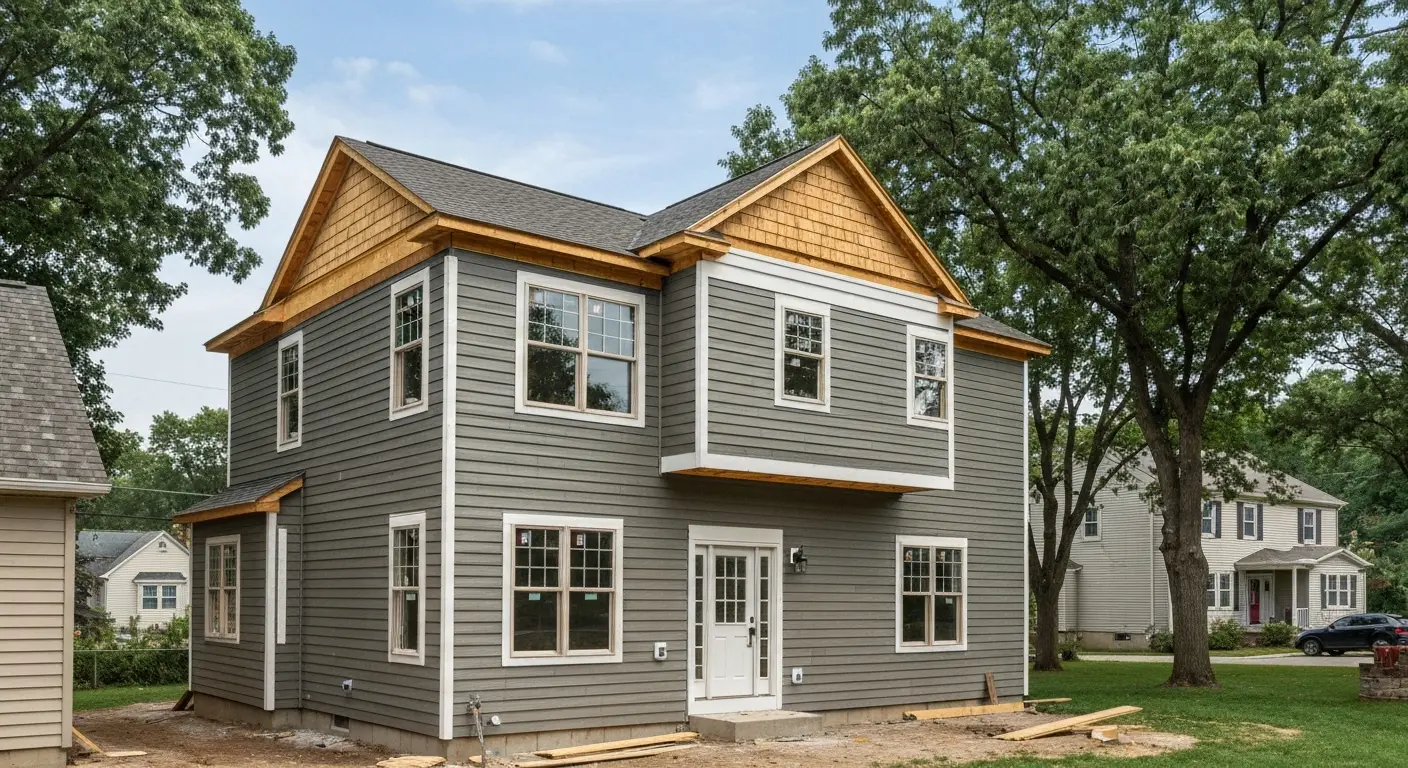
Two-story expansion on Elmwood Avenue home
One-Story Rear & Side Additions
Popular in South Buffalo and downtown lofts where zoning allows expansion. We build out kitchens, family rooms, and mudrooms while respecting lot lines and preserving street-facing character.
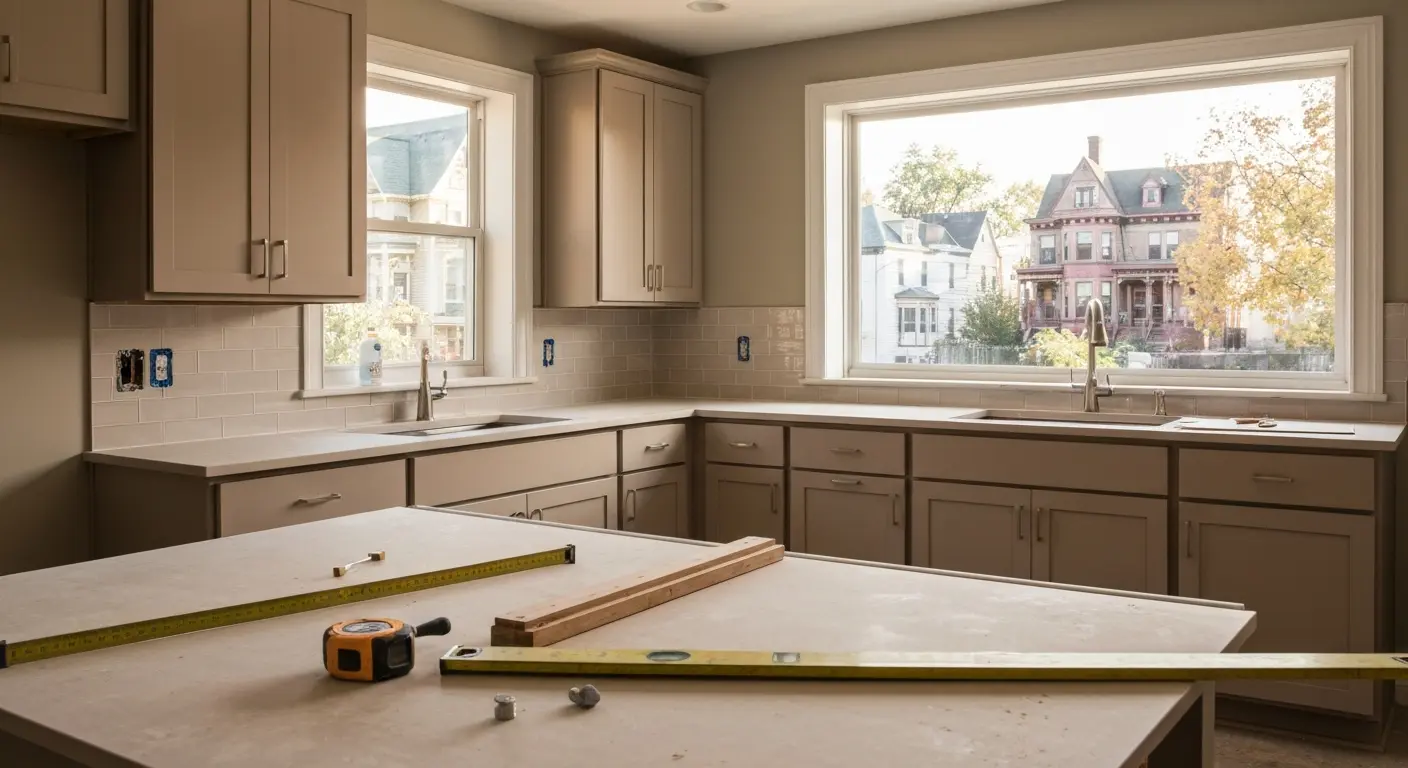
Kitchen addition near Delaware Park, Buffalo
Historic Preservation Additions
Many Buffalo homes sit in preservation districts. We file Preservation Board applications, match materials and proportions, and ensure your addition respects original design. Your expansion looks intentional, not afterthought.
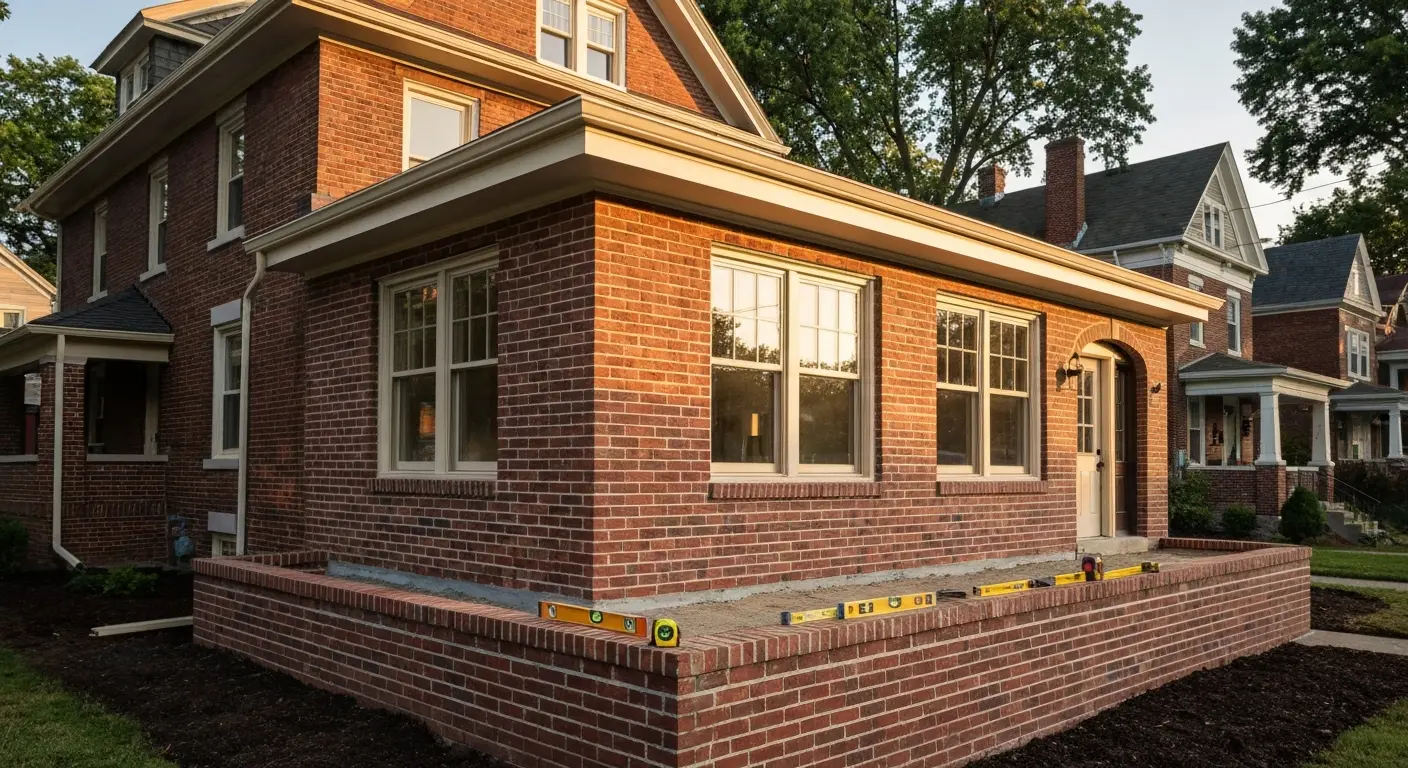
Period-appropriate addition in Allentown district
Why Local Expertise Matters in Buffalo
Buffalo's housing stock is old, diverse, and governed by rules that change block to block
About 4% of Buffalo's parcels sit in historic districts or carry landmark status. Preservation Board review is required before work begins on these properties. We navigate this process so your project stays on track.
Building Code Compliance
Buffalo enforces the New York State Uniform Code for additions on existing buildings. Our team knows which inspections apply, what documentation code enforcement expects, and how to avoid delays at inspection phases. We pull permits correctly the first time.
Existing Building Challenges
Many Buffalo homes have older electrical wiring, plumbing, and structural details that need attention during expansion. We uncover these issues early, present solutions, and integrate new systems into old fabric smoothly.
Over 500 additions completed across Western New York neighborhoods since 2000. Familiar with every block from Hertel Avenue in North Buffalo to Cazenovia Park in South Buffalo.
We Serve These Buffalo Neighborhoods
Established projects across the city, with deep knowledge of local conditions and permit history
Elmwood-Bryant
Tree-lined streets, Victorian homes, and proximity to Delaware Park. Many properties fall under historic district rules.
Parkside
Family-friendly area with Colonial Revival and Queen Anne homes. Strong demand for second-story additions and expanded living space.
North Buffalo
Historic bungalows and estates along Hertel Avenue. Diverse architecture with preservation considerations on many blocks.
Allentown
Historic district with fine architectural detail. Preservation Board engagement is standard on most projects.
West Side
Walkable streets with 1920s housing styles and Victorian charm. Active renovation community and strong neighborhood support.
South Buffalo
Single-family homes and waterfront proximity. Practical, owner-friendly area with straightforward addition opportunities.
How to Reach Us
Call to discuss your project, ask about the permit process, or schedule a free site walk. We're based in Buffalo and serve the entire city. No commute delays—we show up when we say we will.
Frequently Asked Questions
What is a Preservation Board, and do I need approval for my addition?
If your property sits in a Buffalo historic district or carries landmark status, the Preservation Board reviews exterior work and alterations visible from the street. We file the application, handle review, and obtain approval before construction starts. About 4% of Buffalo properties fall under these rules, especially in Allentown, Elmwood-Bryant, and parts of North Buffalo.
Do I need a building permit for a home addition?
Yes. Buffalo requires permits for all new construction and additions, including one-story rear expansions. The permit ensures your addition meets the New York State Uniform Code for existing buildings. We pull and manage all permitting on your behalf.
What happens if my home has old plumbing or electrical?
We assess existing systems during site visit and plan to integrate them safely into your addition. If upgrades are needed to meet code, we discuss options upfront. Many Buffalo homes benefit from bringing mechanical systems up to current standards during expansion.
Can I add a second story to my Buffalo home?
Maybe. Depends on foundation strength, roof design, and zoning. We inspect your home, review city records, and give you a straight answer. Many Parkside and North Buffalo homes are good candidates; others need structural reinforcement or don't suit vertical expansion due to lot size.
Are there tax credits for home additions in Buffalo?
If your home is in an eligible historic district, you may qualify for New York State Historic Preservation Tax Credits on restoration costs. Not all work qualifies, and the process requires pre-approval. Ask us during consultation—we can point you toward resources.
Why does Buffalo need so many code inspections?
Buffalo enforces the Uniform Code, which includes inspections of foundation, rough-in (electrical/plumbing/structural), and final completion. These protect both you and the city. Multiple inspections may feel slow, but they catch problems early and keep your addition safe and code-compliant.
DISCOVER WHAT OUR CUSTOMERS HAVE TO SAY ABOUT US
REVIEWS
proudly serving these areas
Amherst, NY
East Amherst, NY
Hamburg, NY
Kenmore, NY
North Tonawanda, NY
Tonawanda, NY
Buffalo, NY
Cheektowaga, NY
READY TO take the next step?
get a free quote TODAY!
QUICK LINKS
our services
service areas
operating HOURS
Mon: 8:00 am - 6:00 pm
Tue: 8:00 am - 6:00 pm
Wed: 8:00 am - 6:00 pm
Thu: 8:00 am - 6:00 pm
Fri: 8:00 am - 6:00 pm
Sat: 8:00 am - 6:00 pm
Sun: 8:00 am - 6:00 pm